Sunday, November 04, 2007

Return to Walatoola

I made my now traditional fall pilgrimage to Walatoola in Bath County, VA this week ostensibly to help with the garlic planting. As it turns out I received much more from my hosts than I contributed in farm labor.

The vegetable garden produced well this year. (I failed to photograph the huge cluster of ribbons from the Highland County Fair.) The first killer frost hit last Sunday and most of our work was confined to pulling up the dead plants and preparing the garlic beds for planting. We amended the garlic beds with peat, vermiculite and blood meal. An overabundance of hot red peppers, Thai and cayenne, dotted the landscape. And already my hosts had strung dried peppers with dishes of them waiting to be strung.

I also busied myself harvesting saffron crocus. As I worked my way down the row putting the flowers and their precious stamens in my hat, I realized that these little flowers were the only show in town for the eager butterflies and bees. When I got to the last four plants, there was quite a traffic jam of wildlife clustered there, and my HAT was filled with butterflies as well.
a hat full of saffron crocus

I was introduced at my first evening meal to a new winter squash they grew this year called "Sucre du Berry". It is about the color of a cantaloupe inside and it has a naturally sweet flavor. And I also saw my first Sibley squash, though I didn't get to taste it.sucre du berrry winter squash

Sibley winter squash

I left the farm on Thursday morning loaded with canned goods and peppers and fresh herbs and some arugula. Once again a good time on the east side of Warm Springs Mountain.
uncovering the herb beds in the morning
7 garlic beds ready to plant

Tuesday, October 30, 2007

Happy Halloween

All Hallows Eve

As I will be on the road over Halloween, I thought I would post my ghoulish pictures now. There is a house on my daily walk that really gets into the season.
from a distance it is hard to tell all the ghoulishness that awaits the passerby

perhaps a little outdoor barbeque?

I'll take extra ketchup on mine

And watch out or you might end up dinner for the spider!

Trick or treat?

Sunday, October 28, 2007

A New Leaf

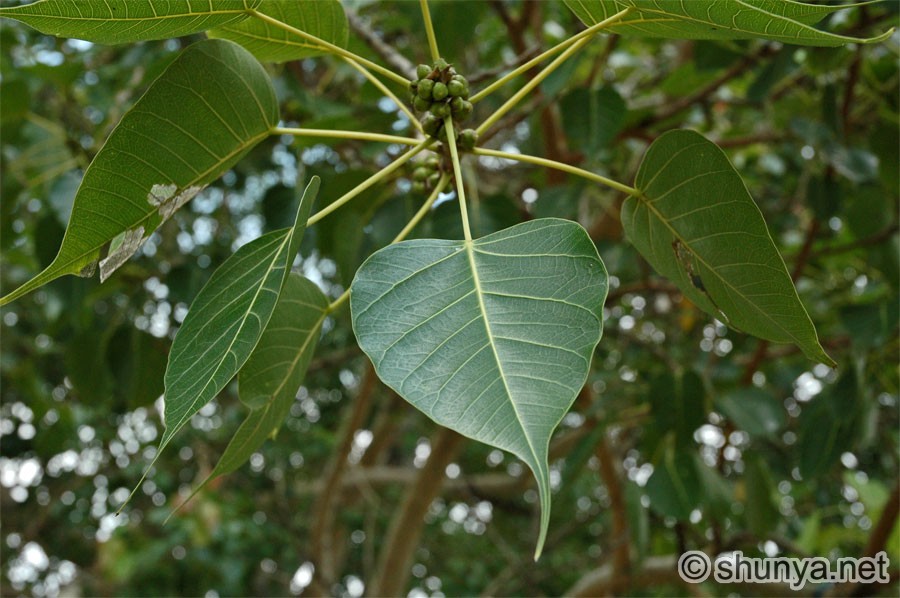
We have had three, nearly four days of long, slow, soaking rain here in the mid-Atlantic. As I was returning home from the subway I saw this tree with golden leaves that looked like the leaves of a BoTree minus the little spike on the tip. [ I had first been introduced to ficus religiosa when I visited the Marie Selby Botanical Gardens near Sarasota Florida.] I, who have been living in the land of oaks, maples, sassafras and birch, was puzzled by this new leaf. I filed it away, not willing to do a bark inspection in the pouring rain. Then yesterday as I was taking my morning walk, I came upon the same leaf yet again. Only THIS time I knew what the tree was because I know it in the springtime.Want to guess the name of the tree this leaf belongs to?

Tuesday, October 23, 2007

There's Nothing Like A Deadline

As the day of departure drew near I thought ... "What about those herbs I've been meaning to transplant?" "What about those new evergreens? Shouldn't they be fertilized" "The lawn ... it needs some lime." So with a 1:15 ferry reservation looming (AND a soaking rain) we raced around the yard pounding 18 inch holes in the ground, dispersing lime pellets and sloppily transplanting and finished just as the first raindrops started to fall. There is nothing quite so satisfying as the sound of rain AFTER you have fertilized and transplanted.

Then I harvested the last of the perishables and put them in a basket. Some of these late 'maters have been really tasty.

Wednesday, October 17, 2007

The Sweet Potato Harvest

Garlic Jelly

So well you might ask, "WHY would I WANT to make garlic jelly?" If you are asking, then this is probably NOT a project for you. But I find it is a great way to use up the extra cloves you choose NOT to plant because they are #1 doubles or #2 too small. With a little bit of patience you will have them peeled and sliced in no time. Thanks to Jim at Walatoola for pulling up this recipe and for teaching me how to do this last season

Garlic Jelly
(from Blue Ribbon Preserves Linda J. Amendt, p. 102)

This exotic jelly is heaven for garlic lovers. Spread a small spoonful on a cracker for a great snack or appetizer.

makes about 7 half-pint jars


Garlic vinegar

3 cups white wine vinegar
¾
cup peeled and very thinly sliced fresh garlic (about 50 cloves)

Jelly Recipe

2 cups garlic vinegar
2 cups white wine
6 cups sugar
2 3 ounce pouches of liquid pectin

To prepare the garlic vinegar: In a medium stainless steel saucepan, combine the wine vinegar and garlic. Over medium heat, bring the garlic mixture to a gentle boil. Reduce the heat, cover and simmer for 15 minutes. Remove the pan from the heat.

Pour the garlic and vinegar into a 1½-quart clean glass jar, or divide evenly between 2 (1-quart) jars, then set aside to cool. When the mixture is cool, cover the jar opening with 2 layers of plastic wrap, then screw on the lid or ring. Let stand at room temperature for 24 hours.

Place a fine-meshed sieve over a pan or bowl. Ladle the garlic pulp and vinegar into the sieve to separate the pulp from the vinegar. Discard the garlic pulp. Rinse the sieve and line it with 4 layers of clean, damp cheesecloth. Stain the vinegar through the cheesecloth 2 times, rinsing the cheesecloth between each straining. Line the sieve with a paper coffee filter and strain the vinegar again. Cover the vinegar and let stand several hours or overnight.

Ladle or pour the vinegar into another container, being careful not to disturb or pick up any sediment from the bottom of the original container. Discard any sediment. Place a fine-meshed sieve over a pan or bowl. Line the sieve with a paper coffee filter and strain the vinegar. For a clearer jelly, strain the vinegar through 2 or 3 layered paper coffee filters. Measure 2 cups of vinegar.

To make the jelly: In an 8-quart pan, combine the garlic vinegar and white wine.

Over medium heat, heat the mixture until warm. Add the sugar and heat, stirring constantly, until the sugar is completely dissolved. Increase the heat to medium-high and bring the mixture to a full rolling boil, stirring constantly. Stir in the entire contents of both pectin pouches. Return the mixture to a full rolling boil, stirring constantly. Boil, stirring constantly, for 1 minute. Remove the pan from the heat.

Quickly skim off any foam and immediately ladle the hot jelly into hot jars, leaving ¼-inch headspace. Wipe the jar rims and threads with a clean, damp cloth. Cover with hot lids and apply screw rings. Process half-pint jars in a 200F (93C) water bath for 10 minutes, pint jars for 15 minutes.

Variation:

Garlic Chive Jelly: Add ½ cup finely chopped fresh chives to the jar before adding the hot garlic and vinegar mixture.

Wednesday, October 10, 2007

The Garlic Is Planted

With the promise of three days of rain to follow, I worked all day yesterday to get the garlic planted. I decided to devote four rows in each of my two 4x8 raised beds to possible ribbon contenders. For those rows I planted the garlic in a wider grid ... 6x8 inches. Into those rows I planted Montana Giant, Ukranian, Sicilian Artichoke, Pskem and the one I call Place Monge.

Then once the garlic was planted I used the leftover planting cloves to make Garlic Jelly. It requires lots of filtering to make it clear. Here it is in the early stages.

Monday, October 08, 2007

Ready for the Shelf

Autumn Olive Jam

I went down in to the field yesterday afternoon to gather autumn olive berries. The drought has taken a toll on the ones in my front yard. Many bushes are sporting a pale red berry that doesn't look like it would taste very good. While searching I spied a HUGE wasps nest tucked in the branches of a red cedar. I've never seen a nest this big. The diameter at its top was between 15 and 18 inches and it was nearly 2 feet long. But I digress.

The Autumn Olive Elaeagnus Umbellata is really not an olive at all but a bright red berry that ripens the first week in October. It is an invasive species here and I figure what better way to combat an invasive species than by eating their seed. It has the ability to fix airborne nitrogen in its roots and so has an unfair advantage when dealing with native plants in low nitrogen habitats. And recent studies have shown that these little berries ounce for ounce pack 17 times as much lycopene as tomatoes.

So I gathered the requisite 8 cups of berries and followed my carefully worked out recipe from last year. The only difference is that 8 cups of berries this year only yielded 4 cups of pulp. But I carried on as if it were 5 cups anyway and it tastes pretty good.

Garden Structure

Sunday, October 07, 2007

Building a garden tepee structure

The Polly Hill Arboretum offered a workshop in building garden structures yesterday and I signed up. It was run by Janice Shields who operates in the Berkshires of western Massachusetts. I arrived a little before 9:00 am with my drill and my loppers and my hammer.

Janice shared her story of how this work found her. It is a wonderful marriage of her artistic talent and the reclamation she does on land that is being cleared for housing. She makes that pesky bittersweet in the backyard sing with poetic whimsy on her trellises and furniture.

The 14 of us in the workshop were taught how to construct both a tepee type structure or a straight up piece. I was looking to build something for peas to grow on, so I chose the tepee style.


We worked in teams and helped each other hold down the wood as we built the basic structure. Then once that was done, the process of decorating began. The wood sort of speaks to the other wood about where it ought to go on the structure. You lay it on the surface and feel where it wants to rest. When I got home I went through c some old driftwood I had in the shed and added a piece to the top of my structure.
Now that I know how easy this is to do I may build some tomato cages out of old poplar we have been cutting down.

Wednesday, October 03, 2007

Beans

I think the most satisfying crop I grew this year, next to tomatoes of course, was green beens. I used a variety of French beans and succession planted them every 10 days starting in early May. What was interesting is that the tired old plants got a second burst of flowering energy that I wasn't expecting. After they gave their first crop, they would have about a 2 week period of dormancy and then IF they were sufficiently watered, I would start to see flowers again. The beans from this second wind were more likely to be misshapen and would get woody faster. But there were plenty of good beans to get each day.I did NOT have good luck with Vermont Cranberry Beans. The reason is I used old seed. But I did get enough to muster up a bean and kale soup for lunch. Kale soup is an island staple that usually calls for sausage (chorizo). Here is a less fat laden version.
Caldo Verde

1/2 lb. kale 1 onion chopped
4 cups bullion

1/2 tsp. red pepper flakes
1 cup fresh Vermont Cranberry Beans (a can of Progresso Cannelini Beans is a perfect substitute)
1 potato grated


crusty bread and fresh mint (optional)

Shred the kale and combine with the onion, bullion and red pepper flakes. Bring to a boil and cook for 1 hour. Add beans and potatoes. Cook 1/2 hour.
Place a piece of bread in the bottom of the soup bowl and cover with a sprig of mint. Ladle the soup over the bread and mint.

Friday, September 28, 2007

My new faucet

Well it's official. This was the second driest summer on record here on the Vineyard. Lots of thunderstorms would swell up on the mainland in the afternoons, but they never made it across the water. Yesterday when I composted the garlic beds in preparation for fall planting, I was turning what amounted to dust.

So it was appropriate that yesterday I received the last of my birthday presents ... a faucet INSIDE the garden gate. Matt from Hide-a-Hose came by and in no time had my faucet in place. It is amazing how this equipment works. It has a big slicing blade that slices through the lawn and simultaneously drags the 3/8 inch pipe into place.

From the Garden Gate September 24, 2007

Wednesday, September 26, 2007

From Mr. Zack to Ms. Zac

My friends from Walatoola sent me an article from the Washington Post that my friend Brenda had mentioned in Comments that offers some new insights into our good friend, Big Zack. First I stand corrected: His name is really Big Zac named after Minnie Zacarria of Long Branch, NJ. And maybe “he” should really be “she” in deference to Minnie and her “lasting contribution to mega-tomatoes.” If you are at all interested in the sport, check out The Making of a Monster.

Tuesday, September 25, 2007

The autumn garden

It is that time of year when the garden is on the wane. Only a few tomato plants are offering fruit and even those are being handed up with black spots here and there. Those crops that do look toward fall … the kale, Swiss chard, rutabaga, Brussels sprouts and spinach … are still far from their full autumn promise.
I am growing 5 varieties of spinach this fall in the hopes of getting some of it to over winter. The varieties I planted are Space Hybrid and Olympia Hybrid from Fedco; Melody F1 and Nobel from Peters Seed and Research and a Geant d’Hiver from Vilmorin seeds in France. This is the shadiest bed in the garden and getting darker by the day, but maybe next June that will have a payoff.

I have three artichoke plants growing in a bed just outside the north end of the garden. I have two Northern Star and one Emerald, and I will try again this year to overwinter them. They were put in the ground VERY late this year … late June. What I am hoping is that I can surround them with hay bales and cover with some windows I have in the basement. Northern Star, in particular, is reputed to handle northern climates as a perennial. The package says:

The first hardy Green Globe artichoke bred to overwinter and spring harvest in more northern locations. Good uniformity, better than most other Green Globe Artichoke strains. The only selection we’ve tested that has survived sub-zero temperatures without protection. Winter hardiness is a complex matter so we offer this for trial only – no guarantees. May-June sowings will generally produce the following spring (April-June 300 days)

We shall see. This will be my third attempt to over winter artichokes.

The sweet potato vines look strong. Every now and then I will spy a little sweet potato flower. They usually do not show themselves until after Labor Day here. And speaking of vines … the morning glory vine on the gate has decided to EXPLODE with blossoms. That vine has waited all summer to throw out a blossom and now it is festooned.


The last of the tomatoes

Saturday, September 15, 2007

Rain at last!

Well FINALLY, some rain. It has not rained here since the before the Fair. This quarter inch is welcome, but clearly not enough.

Meanwhile, I gathered up the last offerings of red tomatoes and made another few quarts of tomato sauce. The other thing I have been doing with my extra tomatoes is making a Greek Salad that is just perfectly put together. I found the recipe over in Kalyn’s Kitchen and have made it at least five times this season. The smell of fresh mint and lemon fill the kitchen all morning as the herbs blend with the tomatoes and the feta. Here are the ingredients:

Wednesday, September 12, 2007

Big Zack Turns Red and Makes His Way to the Table

After gracing my mantle for almost three weeks, dressed in his tidy blue ribbon, Big Zack finally made his way to the table Monday night. I was not expecting much in the way of flavor given the fact that he had ripened indoors, and I was pleasantly surprised. He rivaled the Italian Sweet for genuine tomato flavor. Once again Big Zack proves himself to be a true champion.

Friday, September 07, 2007

Beyond Tomatoes

If you were to tiptoe out into my garden early in the morning you might well over hear a conversation among the other vegetables "You know ... she likes the tomatoes best." Well there ARE other things in this garden besides tomatoes.

So first there are the eggplant. They had a devil of a time setting fruit. I fed them some calcium and that (or maybe just time itself) seemed to set them straight. But only one of the three plants had adequate sun ... shaded as they were by ... you guessed it, the tomatoes.
My basil has done better than EVER this year. Usually by mid-August it is woody and bitter. It is still lush and supple. I wonder if planting it next to a row of green beans helped act as a windbreak. And then there are the winter squash. Say hello to the Winter Squash Class of 2007. On the top stair are two Candy Roasters and two Winter Luxury Pumpkins. And on the bottom stair are supposed to be BABY Blue Hubbards except that one of them didn't know he was a baby. Wish I had planted some Butternuts.

Thursday, September 06, 2007

Tomato Round-up

This year's tomato harvest was the best ever. The problem is, they all ripened at once. The humidity of late July and early August caused a leaf browning and interfered with new blossoms. So I have very few green tomatoes out there to sustain me through September. So I have been experimenting with rejuvenating some of the old plants. I don't expect I will see anything red by first frost, but the project will teach me something about how to manage such a process earlier in the season.

So what varieties worked well this year? I think Little Mama is one I will definitely try again. They produced long plum tomatoes. And I would like try my hand at Principe Borghese even though the plant struggled all season long. And the Costoluto Genovese was a lovely looking tomato.

Costolutto Genovese
Little Mama
The Better Boys are so reliable. They will always have a place in my garden. And the Boxcar Willies were and still are great producers this year. And the 8 or so Italian Sweets I got from my 3 plants were certainly worth it. They are ALWAYS the best tasting tomato in the garden.

Principe Borgheses sun drying

Sunday, September 02, 2007

One Local Summer Week #10

The final OLS meal this week focused around grass fed beef from the Allen Farm. It was adorned with Morning Glory Farm corn plus tomatoes, green beans and potatoes from the garden. A special thanks to Liz at Pocket Farm for challenging us all to put action behind our intentions each week. And Week #10 of OLS means that it is time to START this year's September Eat Local Challenge