Showing posts sorted by relevance for query autumn olive. Sort by date Show all posts

Thursday, September 28, 2006

Autumn Olive Jam ~ the Saga

Before I retired in June of 2004, I would bid farewell to this summer home and head back to work each fall. I would return in October to feverishly plant my garlic in a few days, and so I missed one of the great bounties of September … the autumn olive berries.

I spied them first in the fall of 2004 with their deep red color enriching the fall landscape. And then last fall my friends from Walatoola found a jar of autumn olive jelly which I devoured this spring. So I thought perhaps I should try my hand at making some myself.

I have never canned anything in my life. I don’t own any canning equipment. But I decided there’s a first time for everything.

THE HARVEST

I walked out on a sunny morning last week. The air was still and the berries glistened in the morning sun. As I made my way into the high grass, wet with the morning dew, the smells of wild mint wafted up as I crushed the grasses. I carried a paper bag and would take berry laden branches and lean them into the bag and strip the berries. Soon I had eight cups.

THE FIRST ATTEMPT

Now this part was interesting. First I had to separate the berry from its seed. So I added 2 cups of water to my berries and cooked them for about 20 minutes. I then put the mash through a sieve and had a little more than 5 cups of pulp. It looked like I would be making jam, not jelly. Just in time I received an email from my friend Jim (canner extraordinaire) and he provided two links that helped me decide on how to craft my own recipe. (see below)

Well I will spare you the details, but my jam did not set. So I was left with 7 jars of what I call “Autumn Olive Coulis.” It is actually pretty good … How does this sound for an over the top menu description? “Fresh local lamb chops rubbed with garden mint and fresh rocambole garlic, grilled over mesquite and served on an autumn olive coulis.”

IF AT FIRST YOU DON’T SUCCEED

So on Sunday I went out again to gather berries. This time the wind was howling and the branches flailed as I tried to tame them into my bag. BUT the 5 extra days of ripening made a significant difference in the size and sweetness of the berry.
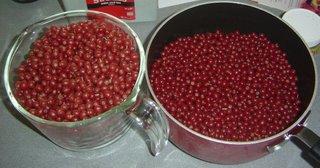
This time I read the directions on the Sure-Jell BEFORE I started and I believe I have five nice jars of Autumn Olive Jam to show for it.


Recipe for Autumn Olive Jam

Gather 8 cups of ripe autumn olive berries. (For me in coastal Massachusetts, the pick date is September 25)

Add 1 cup of water to the 8 cups of berries and bring to a boil then simmer for 20 minutes. Run the mash through a sieve and you will have about 5 cups of pressed fruit.

Measure out 3 ½ cups of sugar. Take ¼ cup of the measured sugar and mix it with the contents of a package of no-sugar-needed Sure Jell. Mix it in with the pressed fruit and bring to a rolling boil. Add the remainder of the sugar to the boiling liquid and return to a rolling boil and let it boil for one minute.

Then can according to canning directions and cool.

I ended up with a little more than six 8 oz. jars of well set jam. Nice and tart.

http://tribes.tribe.net/floydcounty/thread/d4bb9ed5-9618-45cb-b043-a5fdbb7e837f

http://forums.gardenweb.com/forums/load/edible/msg0711083011420.html
Tuesday, October 07, 2008

Russian Olive vs. Autumn Olive: Inquiring Minds Want to Know

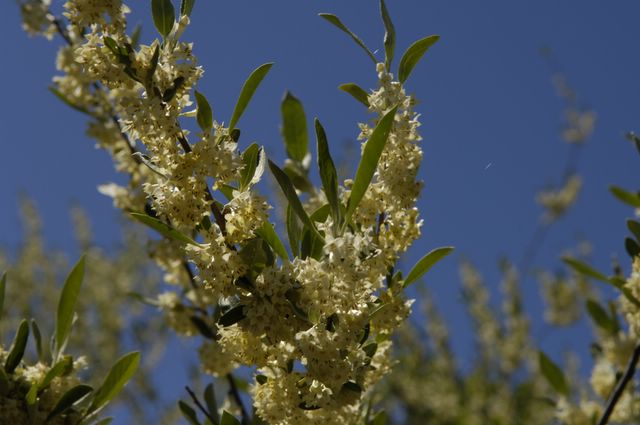
I am no expert here, but yes there is a difference between the two . They are both from the Oleaster Family and both are listed as invasive. Russian Olive's scientific name is Elaeagnus angustifolia and the Autumn Olive's is Elaeagnus umbellata. Here in New England, at least, it is the Autumn Olive that is our invasive nemesis.
Perhaps the best way to tell them apart is that Russian Olive has stiff thorns, and the silvery scales that adorn only the bottom side of an Autumn Olive leaf, are on both sides of a Russian Olive leaf. And this time of year, one would see on the Russian Olive a more yellow to orange colored fruit, instead of the bright red of the Autumn Olive.

While I am no fan of this invasive, I must say that I have grown to love the fragrance of their flowers in the air in late May. The first whiff just stops me in my tracks. And their high density of the antioxident, lycopene, has SOME looking to make a cash crop out of the pest. Check this out.

Monday, October 06, 2008

Autumn Olive Recipe Time


I have a confession to make. If it weren't for my Autumn Olive Jam Recipe, I would have lots fewer readers. It seems that all over the country people are wondering what they can do with the fruit of these invasives.

I still have jars of jam from last year, so this year I thought I would make fruit leather. All summer I had been meaning to buy a dehydrator, and here I am a the end of the season without one, so this recipe will be for the oven dried variety of fruit leather.

My objective in making the fruit leather was to use it cut up in small chunks the size of dried cranberries to use in salads. I didn't want too sweet a flavor.

Why eat Autumn Olive berries?

I like the berries because they have that cranberry flavor that we associate with eating game in the fall months. But the best reason is that it is an unexpectedly rich source of lycopene ... nearly 15 times that of raw tomatoes.
Picking the berries

Not all Autumn Olive bushes are equal. Before you start loading your buckets, roam your picking area and taste them. I find that bushes that get morning sun, but shade from 11:00 AM on yield the sweetest berries. The sweeter the berry, the less sugar you will need. Although sweet is a relative term here ... these berries are a might tart. I look for plump bright red berrries. I use a shopping bag as my bucket and place the fruit laden branch inside the bag and strip them from the branch. For rthis recipe you will need 4 cups of pulp. I had to pick about 7 cups of berries.

Autumn Olive Fruit Leather
4 cups of Autumn Olive Berry pulp
1 Tbsp Lemon juice (optional)

2 Tablespoons local honey (helps make the leather more pliable)
10 drops of liquid Stevia

To make the berry pulp, add one half cup of water to every 4 cups of berries and boil on the stove until the seeds have separated from the berry. (I actually added sprigs of mint to the berries at this stage. It is also where you would add the lemon juice if using.) Run through a food mill or a sieve and return pulp to a saucepan on the stove. Add the honey and Stevia. If you want a sweeter fruit leather, then add sugar one tablespoon at a time to the simmering pulp, tasting for desired sweetness.
Lay a piece of parchment paper on a cookie sheet and spread the pulp on the parchment to a 1/8-1/4 inch thickness. Place in a 140 degree oven (mine doesn't stay that low so I did mine at 170 degrees) for 10-12 hours. You can tell if it is ready by peeling it from the parchment and by touching it in the center of the tray. When it is done it will be tacky but not sticky. Also when it has cooled it is more likely to be less sticky than when you test it when it is warm.

Storing the fruit leather

I decided to cut mine in half lengthwise. I stored one half by rolling it in plastic wrap and putting it in the freezer. The second half I halved again and put a plastic wrapped roll in the fridge and the other half I cut up into little pieces to use in salads where I would normally use dried cranberries. These I stored in a glass jar.

Monday, October 08, 2007

Autumn Olive Jam

I went down in to the field yesterday afternoon to gather autumn olive berries. The drought has taken a toll on the ones in my front yard. Many bushes are sporting a pale red berry that doesn't look like it would taste very good. While searching I spied a HUGE wasps nest tucked in the branches of a red cedar. I've never seen a nest this big. The diameter at its top was between 15 and 18 inches and it was nearly 2 feet long. But I digress.

The Autumn Olive Elaeagnus Umbellata is really not an olive at all but a bright red berry that ripens the first week in October. It is an invasive species here and I figure what better way to combat an invasive species than by eating their seed. It has the ability to fix airborne nitrogen in its roots and so has an unfair advantage when dealing with native plants in low nitrogen habitats. And recent studies have shown that these little berries ounce for ounce pack 17 times as much lycopene as tomatoes.

So I gathered the requisite 8 cups of berries and followed my carefully worked out recipe from last year. The only difference is that 8 cups of berries this year only yielded 4 cups of pulp. But I carried on as if it were 5 cups anyway and it tastes pretty good.

Friday, May 07, 2010

Let the games begin !

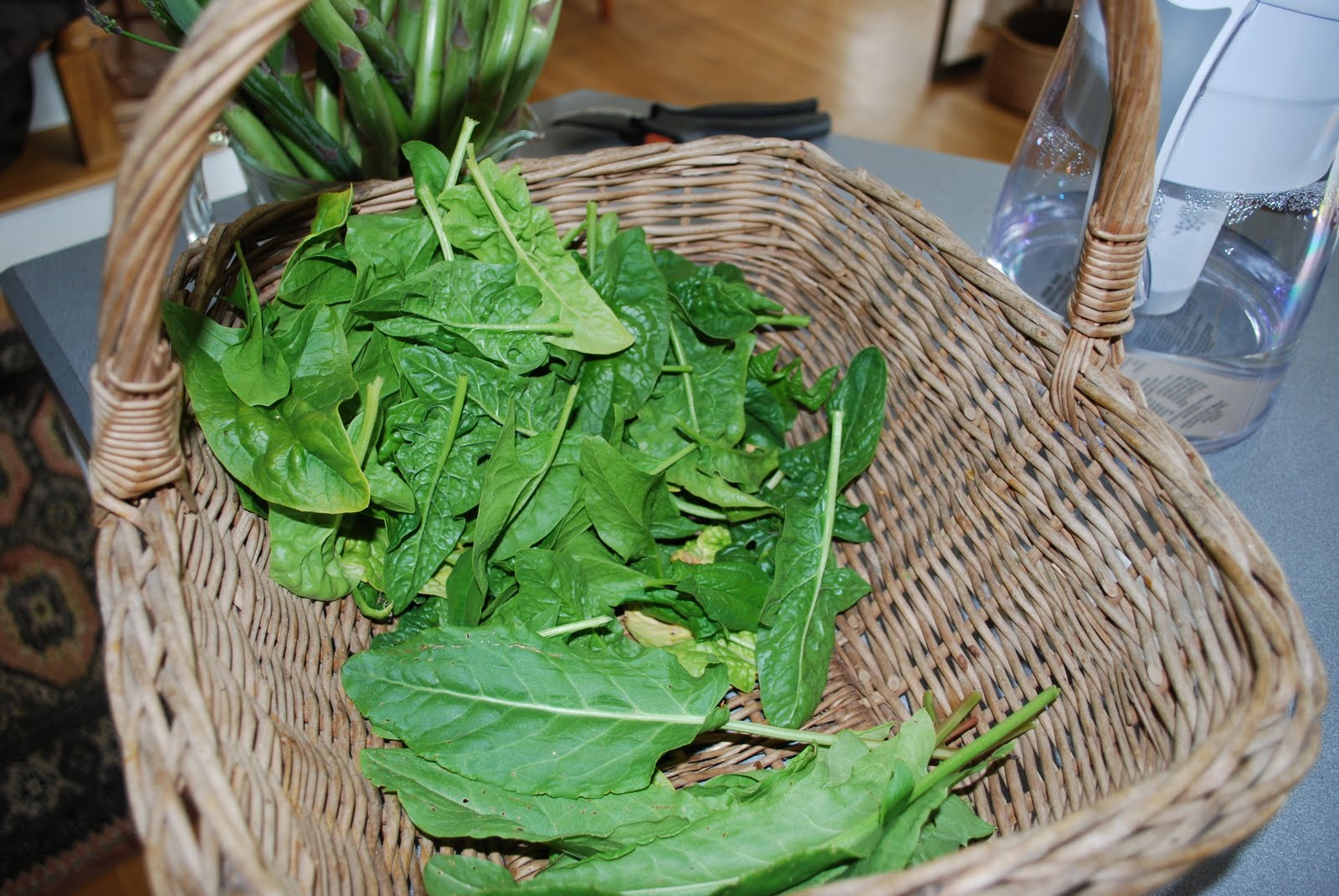
I arrived on a breezy, sunny afternoon to find some nice gifts in the garden. I was able to harvest about 4 pounds of asparagus and set to work cooking it on the grill for dinner. I have been eating asparagus from the farmer's market for a few weeks now, but still it does not have the flavor of fresh from the garden. The next morning I found some random greens ... spinach and sorrel ... and I set it aside in the fridge. So the harvest has begun. Now I must set to work doing all the things that other gardeners have been doing since March ... pulling weeds ... cleaning beds ... working compost ...

I must say I feel that the season is at least two weeks ahead this year. The landscape looks like Memorial Day not May Day. I even got my first whiff of autumn olive this morning. Two extra weeks of growing season is fine with me.

Sunday, October 01, 2006

The Harvest Festival

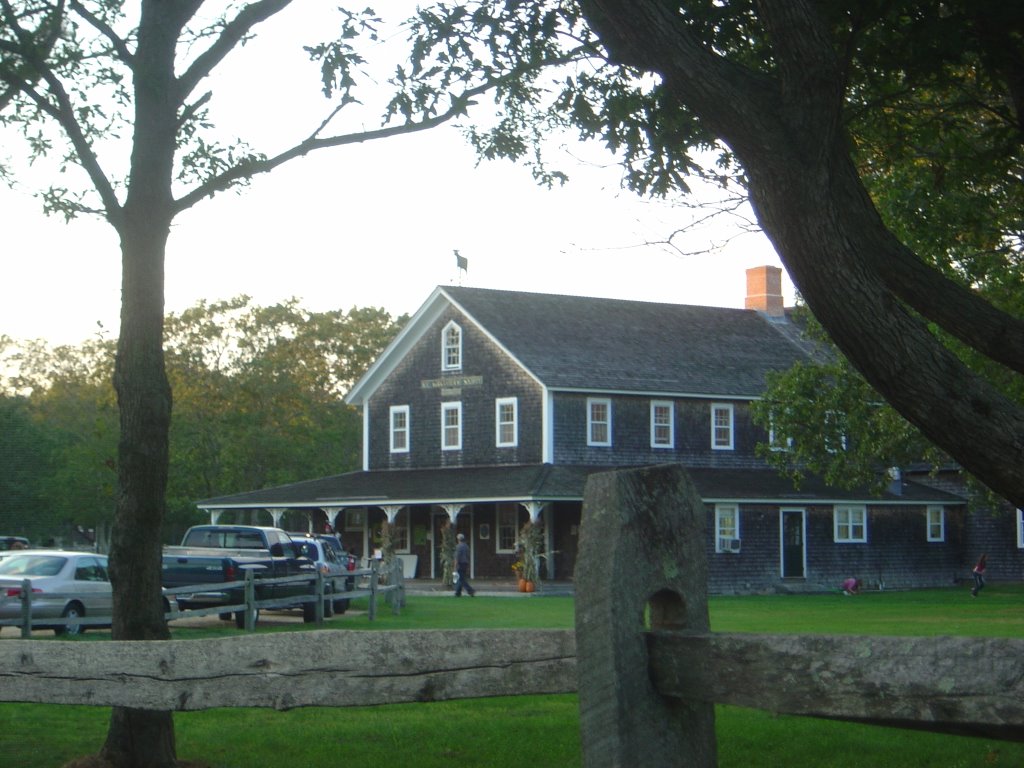
The Harvest Festival was held last night at the Ag Hall. It was a community pot luck where the only rule was you had to bring a dish made with local ingredients.

My contribution was a Local American Chop Suey made with local ground beef and an all local tomato, pepper, onion and garlic sauce.

Before hand we had free Tomahawk oysters from the local aquaculture enterprise of the Aquinnah Wampanoags. Wine was provided by our local Chicama Vineyards and I enjoyed a Chenin Blanc and a Summer Island Red. There was also a big block of what we used to call “store cheese” here in New England. Every General Store would have a block of cheddar ready for slicing at the checkout counter. Our Morning Glory Farm still does. This particular cheddar one was from Cabot Cheese in Vermont. There was also a generous helping of fresh chevre from Christiantown Farm. I have some in the fridge right now (thanks to Mary Beth), and I find it goes particularly well with the autumn olive jam.

We ate well, visited with friends and danced off most of what we ate to a swing band. A great way to celebrate the harvest!

Recipe for Local American Chop Suey

From the Farm Institute

1lb ground beef

From Whipporwill Farm

1 onion chopped
1 red pepper chopped
1 yellow pepper chopped
3 tomatoes

From my garden

6 cloves garlic
7 tomatoes
Basil
Parsley

Other Ingredients

3 cups elbow macaroni
1 cup Classico Fire Roasted Tomato Garlic Sauce
By the Sea salt à Chilmark

Brown the ground beef. Set aside. Make a sauce from peeled seeded tomatoes, onions, peppers, garlic, herbs and the one cup prepared sauce. Season with Salt by the Sea to taste.

Prepare macaroni and drain well. Combine all the ingredients. Warm in a 350 degree oven for 20 minutes before serving.

Thursday, September 28, 2006


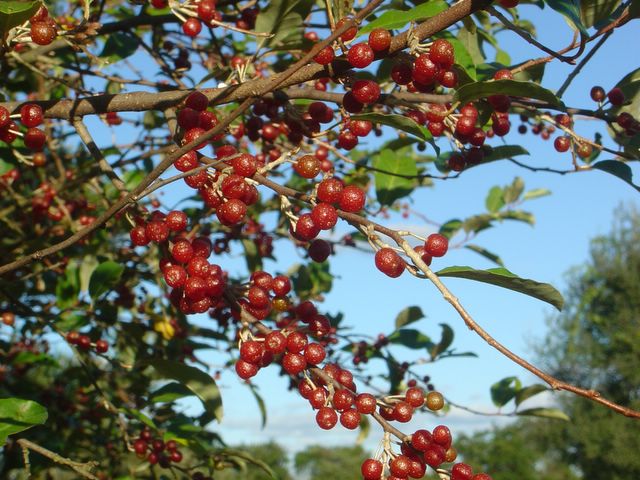
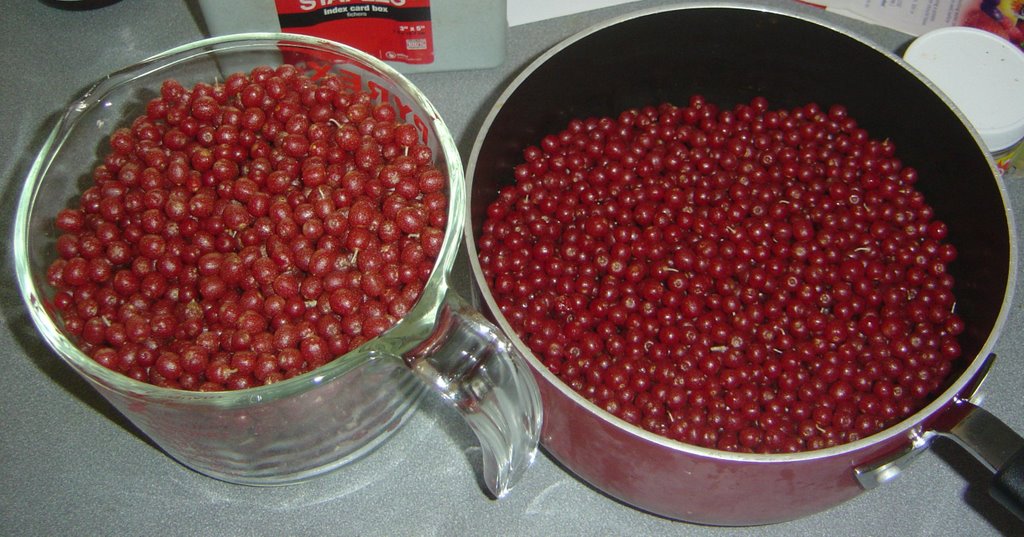
ripe autumn olive berries Posted by Picasa

Tuesday, September 12, 2006


Autumn Olive berries Posted by Picasa

Moving toward fall

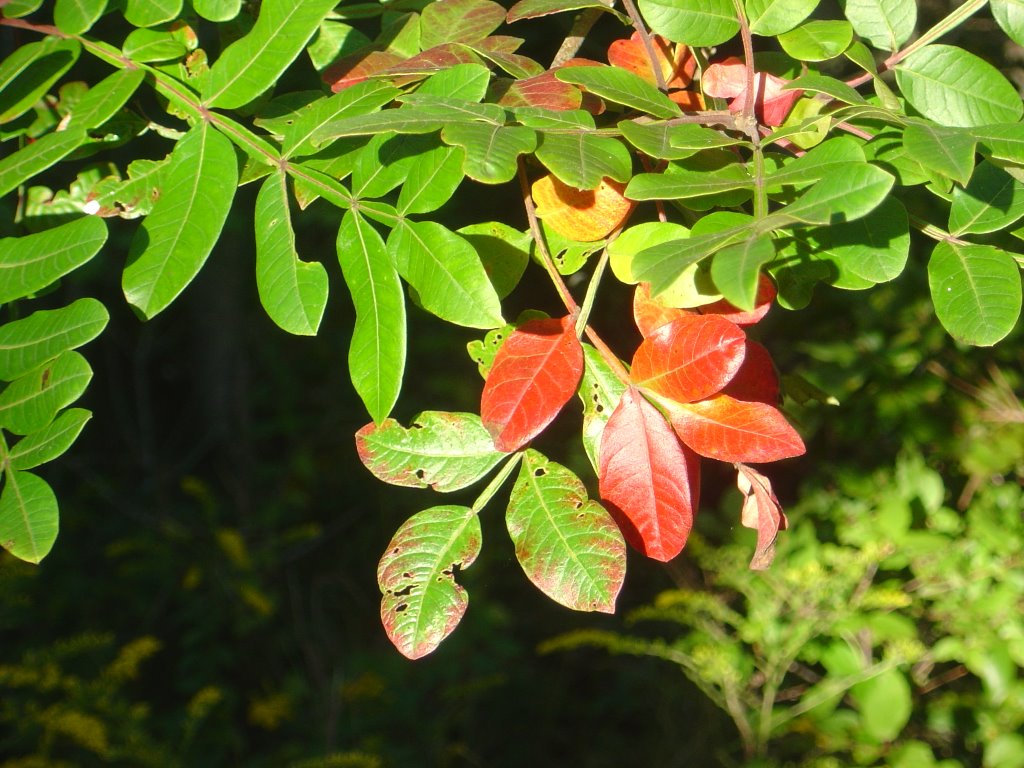
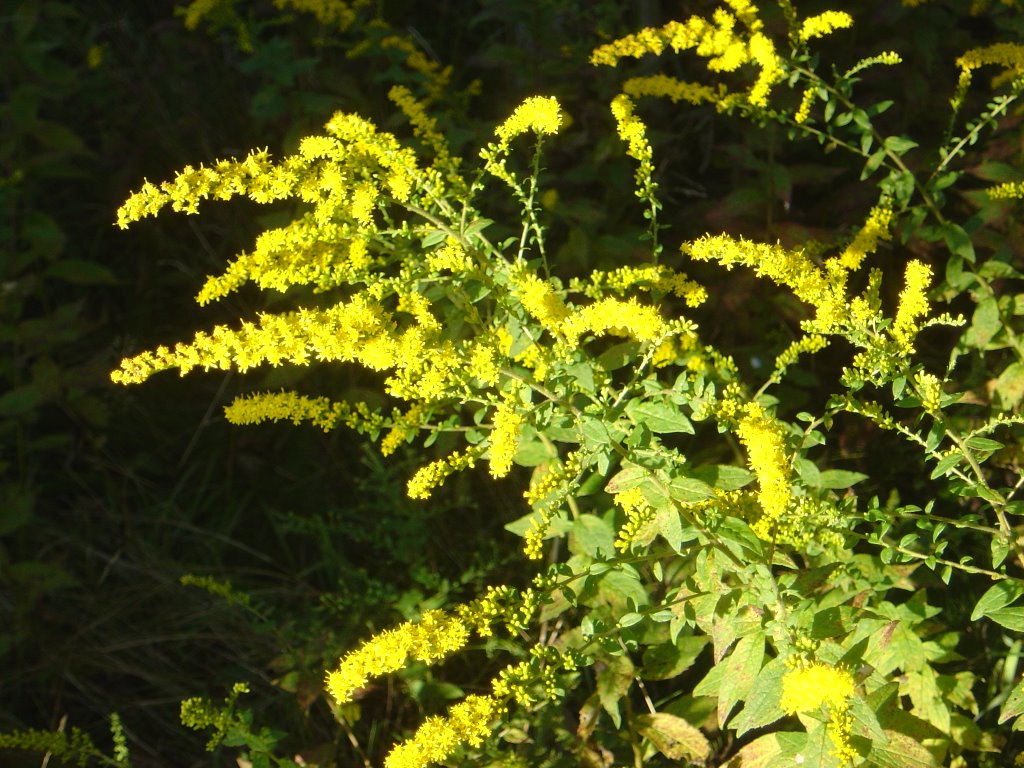
I like to spend a few minutes each evening sitting on the back deck to watch the shadows lengthen over the garden. Sadly that time of day is coming earlier and earlier these days as the sun seems in a hurry to “get south.” I can spy the yellow of the goldenrod and a splash of red from a young sumac and the red berries clustered on the autumn olive. Soon there will be telltale signs of differentiation as the once all green landscape reveals a yellow leafed vine wrapped around a juniper or a willow.

But I have more tomatoes coming out of my garden right now than I have had all summer, so I am going to make myself a BLT for dinner and pretend it's not over yet.

Monday, June 19, 2006

Aromatherapy

About a week or two after the aroma of autumn olive fades, up comes the smell of wild roses. Usually it is borne on a southwest breeze on a warm morning right through the door and up my nose. Even though I SEE the flowers, the aroma always catches me by surprise. And then it is everywhere, like Saturday morning when I was riding my bike to Farmer’s Market. I must have smelled this smell as a child because on Saturday when I was riding my bike I had one of those olfactory moments that took me, or my amygdala, to a warm early summer when school was just out and the joy of an entire summer stretched before me. Suddenly, before I am quite conscious of the aroma, I am in that place and that feeling without knowing quite how I got there.

I had that same sense when I was spreading straw on the asparagus bed. The aroma took me back to when as a young girl I owned and cared for a burro named Pixie. Cleaning his stall and spreading fresh straw was part of the daily chore routine. Memories of that time are not at all in my conscious thoughts, but the smell of straw brings it all back. No wonder it takes me so long to get things done in the garden … I’m off time traveling and don’t even know it.

So back to the wild roses. There is a downside. This wild rose bush (perhaps a not too distant cousin of the trumpet vine) is taking over the yard. I don’t know HOW we missed it, but last year we looked up and this bush had climbed up a spruce tree pretty much killing the northeast side of it and was resting comfortably on top of some wild viburnum choking them as well. Hunter took on this monster in the spring and removed large portions of it to the brush pile with a promise to finish the job this fall. But I must say I would miss this aromatherapy just outside my door.

Saturday, May 27, 2006


Autumn Olive (Elaeagnus umbellata)

 Posted by Picasa